
How do I view these records?
Search and download (£) these records on:

More about these records
You can search and download (£) merchant seamen records 1835-1857.
These are digitised records from a variety of record series held at The National Archives:
- the register of seamen series I in BT 120 (1835–1836)
- the register of seamen series II, in BT 112 (with its associate name index in BT 119) (1835–1844)
- the register of seamen’s tickets, in BT 113 (the surname index is in BT 114) (1845–1854)
- the register of seamen series III, in BT 116 (1853–1857)
For more information on what these records contain see findmypast.co.uk.
See our guide to records of Merchant Navy seamen in service before 1914 for detailed guidance.
How do I view these records?
Search and download (£) these records on:
More about these records
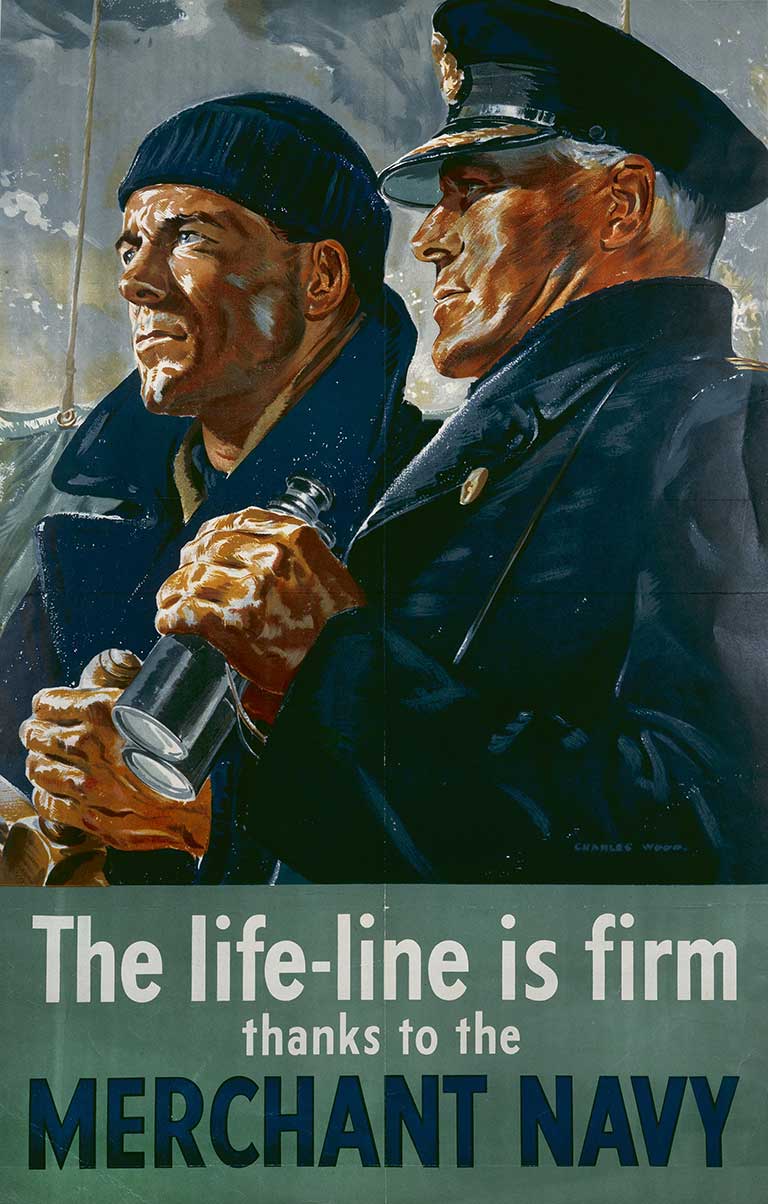
You can search and download merchant seamen records 1918-1941.
These are digitised records from a variety of record series held at The National Archives:
- the Registry of Shipping and Seamen: Register of Seamen, Central Index, Numerical Series (CR 2) in BT 348
- the Registry of Shipping and Seamen: Register of Seamen, Special Index, Alphabetical Series (CR 10) in BT 349
- the Registry of Shipping and Seamen: Register of Seamen, Special Index, Alphabetical Series (CR 10) in BT 350
For more information on what these records contain see findmypast.co.uk.
For more information on merchant seamen’s records from this period, see our guide to records of Merchant Navy seamen in service since 1918.
How do I view these records?
Search and download these records on:
More about these records
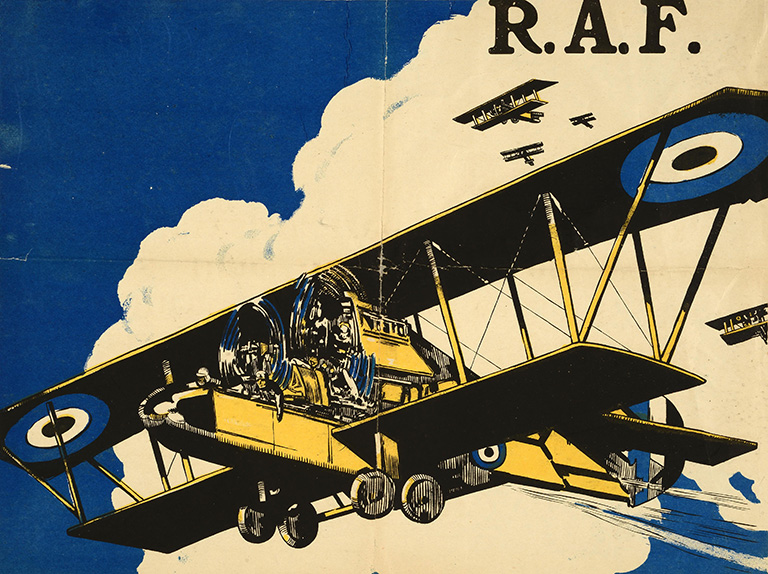
You can search and download service records of Royal Air Force airmen. Officers’ records are not included here and are held in separate collections at The National Archives.
These are digitised records from the following collection held at The National Archives:
- Air Ministry personnel records for airmen (AIR 79)
For more information on what these records contain see findmypast.co.uk.
How do I view these records?
Search and download these records on:
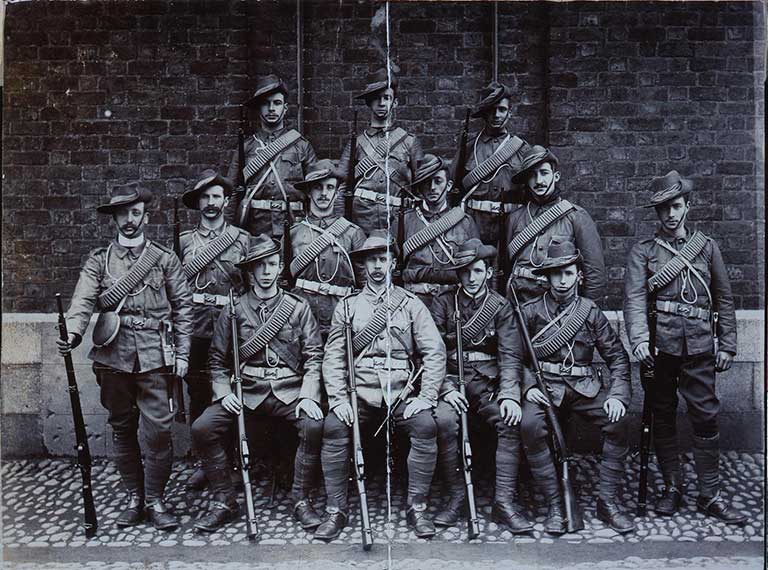
You can search and download (£) pre-First World War British Army records and records of the Militia, the part-time voluntary force organised by county.
These are digitised records from a variety of record series held at The National Archives:
- Royal Hospital Chelsea pension records (WO 97, WO 121, WO 122, WO 131)
- Royal Hospital Kilmainham pension records (WO 119)
- South African War Imperial Yeomanry records (WO 128)
- Militia attestation papers (WO 96)
For more information on what these records contain see findmypast.co.uk.
Find out how to cite records and catalogues held by The National Archives.
Contents
1. Why use this guide?
2. Overview
3. Citing the institution
4. Citing the catalogue reference – single references
5. Citing the catalogue reference – multiple references
6. Citing specific content within a record
7. Citing a series title
8. Citing records from the Parliamentary Archives
9. Examples of full citation
10. Citing web pages from our online catalogue
11. Citing web pages from the UK Government Web Archive (UKGWA)
12. Citing records held by other archives
13. Copyright
1. Why use this guide?
This is a guide to citing The National Archives’ collections. We strongly recommend that you include the references from our catalogue in your research notes. Take particular care to cite sources correctly if you are writing for publication.
Precise and consistent citation helps to demonstrate that your research is based on documentary evidence. It is also crucial to allow other researchers to identify the source, verify information or take any initial research forward.
2. Overview
A brief citation usually contains the following information:
- name of the institution responsible for the custody of the records or maintaining the catalogues – in this case, The National Archives. See section 3 for details.
- full catalogue reference – this is the alphanumeric code used to identify the record and place an order to view it in the reading rooms. See sections 4 and 5 for details.
- internal identifier – this might include details of the folio, page, docket, membrane or other number within a box, volume, file, bundle or roll. See section 6 for details.
Later sections of this guide include information on citing series titles, web pages within our catalogue and content within the UK Government Web Archive.
Discovery, The National Archives’ catalogue, includes details of collections held by more than 2,500 archives across the UK. See section 12 for help on citing records not held by The National Archives.
3. Citing the institution
The National Archives
State our name in whichever of these forms is more appropriate for the context of your writing:
- The National Archives (TNA)
- The National Archives of the UK (TNA)
We recommend using a capital T on ‘The’ when writing our name, whether or not it comes at the beginning of a sentence.
The Public Record Office and the Historical Manuscripts Commission
The National Archives was formed in 2003 when the Public Record Office (PRO) and Historical Manuscripts Commission (HMC) merged.
Since 2013 we have advised researchers that is no longer necessary to insert the names Public Record Office (PRO) or Historical Manuscripts Commission (HMC) within the citation. In older publications you will find variations in how our name is cited.
4. Citing the catalogue reference – single references
Set out the reference exactly as it appears in Discovery, The National Archives’ online catalogue. Use the same spacing and punctuation found in the catalogue. For example:
- ADM 22
- ASSI 34/57A
- CO 700/MaltaandIonianIslands10a
- HO 42/15/1
- IR 130/9/260part2
- LAB 2/10/L169/1901
- MINT 33/FD/Z
- WO 399/9351
The various parts of the reference reflect the structure of The National Archives’ catalogue. You will usually want to cite the lowest available level in the catalogue hierarchy.
4.1 Department code
This should be set out exactly as it appears in The National Archives’ online catalogue, Discovery. The department code consists of one or more capital letters with no punctuation. They represent the government department, agency or body that created the records. They can also identify the name of a holding, high level collection or fonds. For example:
- C (Chancery)
- WO (War Office)
- ADM (Admiralty)
- MPB (Maps and plans extracted to flat storage from records of the Exchequer)
- GUK (Records of GOV.UK)
4.2 Series number
A series is a set or sequence of records with a common origin and function or subject matter. Most series are indicated with a number. Put a space between the department code and the series number.
- ADM 22
- C 142
- MINT 33
- WO 32
A few series codes contain two numbers separated by a forward slash.
- CP 25/2
- PRO 30/36
4.3 Piece number
A piece is typically an individual record, such as a file, volume, roll, box or digital object. Most pieces are indicated with numbers or sometimes with letters and numbers. Put a forward slash between the series number and the piece number.
- ADM 22/405
- C 142/18
- WO 32/7114B
Some piece references are longer. These may include additional numbers, forward slashes, regnal years, law terms or place names.
- AIR 1/6A/4/53
- CO 700/MaltaandIonianIslands10a
- CP 25/2/1321/2GeoIIIMich
- E 134/25Eliz/Trin1
- MINT 33/FD/Z
4.4 Item number
An item is a part of a piece. For example, it may be a letter, a report, a small bundle or an entry in a register. Most items are indicated with numbers, or sometimes with letters and numbers. Put a forward slash between the piece number and the item number.
- C 142/18/10
- HO 42/15/7
- ZSPC 11/326/22A
Some item references are longer. These may include additional numbers, letters and forward slashes.
- AIR 2/33/Southern8/8657
- LAB 2/10/L169/1901
- MUN 5/19/221/1
5. Citing the catalogue reference – multiple references
5.1 Multiple series
To cite a run of consecutive series, state the full reference of the first and last series references, separated by a hyphen:
- CO 260 – CO 265
To cite two or more non-consecutive series, state each reference in full, separated by semi-colons:
- ASSI 35; ASSI 45; ASSI 54
5.2 Multiple pieces
There are two ways to cite a run of consecutive pieces:
- When the first and last piece numbers differ only in the element following the final forward slash, there is no need to repeat all of the elements. State the reference of the first piece full, followed by a hyphen and the final element of the last piece number:
- MH 17/107-112
- E 134/25Eliz/Trin1-4
- When the variation occurs in any element before the final forward slash, state the full reference for both the first and last pieces, separated by a hyphen:
- ASSI 35/55/1 – ASSI 35/58/2
To cite two or more non-consecutive pieces in the same series, follow the same principles:
- When the piece or item numbers differ only in the element following the final forward slash, state the reference of the first piece in full. Add the final element of the remaining references, separated by commas:
- ASSI 35/55/1, 3, 6
- When the variation occurs before the final forward slash, state the full reference of each piece in full, separated by semi-colons:
- ASSI 35/55/1; ASSI 35/56/2
5.3 Multiple items
To cite multiple, specific items, follow the same principles as for citing multiple pieces, including punctuation:
- ADM 1/1618/26-27
- AIR 2/33/Southern8/8657; AIR 2/33/Western8/2228
- WO 208/3336/24-25, 31
If your citation covers a whole piece, state the piece reference rather than the consecutive run of items. If your citation covers only some items, specify the range or the individual items.
- INF 9/751 (not INF 9/751/1-31)
- INF 9/751/5-6
- INF 9/751/11, 13, 15
6. Citing specific content within the record
6.1 Internal numbering within the record
Many records have internal numeration (numbering sequences) such as page numbers. These vary with the type and physical format of the record. It is often helpful to include them in citations.
Put a comma between the reference as shown in the catalogue and the internal identifier.
- CO 5/690, p 143
- CO 5/690, pp 143-149 (for consecutive pages)
- CO 5/690, pp 103, 108, 113 (for non-consecutive pages)
- CO 5/690, pp 103-149 passim (where many but not all pages in this range are relevant)
We recommend using these abbreviations (without italics or full stops) for different kinds of numeration:
- p or pp for page or pages (used when the front and back of the sheet are numbered individually)
- f or ff for folio or folios (used when the same number applies to the front and back of the sheet)
- no or nos for number or numbers
- m or mm for membrane or membranes (used only for Chancery-style rolls – those sewn head to foot – and for parchment membranes of files)
- rot or rots for rotulus or rotuli (used only for Exchequer-style rolls – those sewn together at the head)
- col or cols for column or columns
Use the following abbreviations to specify the front or the back of the sheet where appropriate:
- r for recto (the front of a folio or rotulus)
- v for verso (the back of a folio or rotulus)
- d for dorse (the back of a membrane). If no ‘d’ is given after a membrane number, it is implied that the number refers to the face.
Write numbers in Arabic numerals. Use small Roman numerals if necessary for disambiguation. For example, the same record may include both a numbering sequence in Roman numerals and a numbering sequence in Arabic numerals. Sometimes, sheets or sections may be ‘numbered’ with letters instead of numbers.
After letters or small Roman numerals, write the word recto, verso or dorse in full instead of the abbreviations, to prevent ambiguity. Repeat the number when citing content that begins on one side and continues onto the other.
- C 66/76, m 21d
- SP 52/40, f 21r
- JUST 1/509, rot 4r-4v
- JUST 1/509, rots 1r, 2v, 4r (for non-consecutive rotuli)
- E 363/3, rot F verso
- SP 52/64, f xvi recto-xvi verso
For the 1911 census, cite the schedule number (abbreviated Sch). For the 1921 census, cite the Electoral District (abbreviated ED) and the schedule number.
- RG 14/26288, Sch 227
- RG 15/12199, ED 7, Sch 43
For other kinds of numeration, such as paper numbers, write the relevant word in full:
- FO 371/96853, file 1015, paper 32
- FO 383/15, docket no 170625
- T 1/4396, paper 6312/33
If there are conflicting sequences of numbers and it is not obvious which numeration should be chosen, consult a member of staff at The National Archives. Briefly indicate the numeration chosen in a list of abbreviations or within square brackets immediately after the number when the document is first cited.
- JUST 1/699, rot 1 [orig nos] schedule 1r
6.2 Other methods of citing specific content within a record
Many records have no internal numeration. In these cases, use the briefest description that allows ready identification of the relevant portion of the record. For instance, this may be the date of a letter and the names of correspondents. We recommend writing dates in the order day, month, year.
- PRO 1/3, 25 June 1840, Workmen to Palgrave
7. Citing a series title
If you cite a series reference in a formal publication, such as a book or an article in an academic journal, you should also include the series title. Copy the title exactly as it appears in the ‘Title’ element of the catalogue entry.
- C 139 Chancery: Inquisitions Post Mortem, Series I, Henry VI
- PREM 9 Prime Minister’s Office: Reports on the Efficiency of the Civil Service by Sir Derek Rayner
You can include the series title in a list of abbreviations, in the bibliography or in the first citation for that series. Any one of those methods is sufficient.
You do not need to include a title or description when citing a specific piece or item.
8. Citing records from the Parliamentary Archives
The National Archives became responsible for caring for and providing access to the Parliamentary Archives’ collections in 2025. Cite these in the same way as other records held by The National Archives.
Set out the reference exactly as it appears in Discovery. The reference may be relatively long and complex, and include additional letters. This is especially true for records of the House of Commons (YHC) and House of Lords (YHL).
- YHC/CL/JO/1/15
- YHL/PO/PU/1/1837
- YLG/F/219/3
When The National Archives took custody of the Parliamentary Archives’ collections, some of their catalogue references clashed with the department codes for our existing collections. To resolve this, we added a Y to the beginning of their references. For example:
- HC/CL/CO/EB/4/3/73 is now YHC/CL/CO/EB/4/3/73
- ERM/10B/10 is now YERM/10B/10
In a few instances, references have changed more significantly. In those cases the former references used by the Parliamentary Archives are noted in the catalogue entries.
- BOND/C/1 is now YBON/C/1
In older publications, you will find the institution cited as the Parliamentary Archives and reference codes cited without the Y. Punctuation may also vary.
9. Examples of full citation
For the first citation:
- The National Archives of the UK (TNA): C 139 Chancery: Inquisitions Post Mortem, Series 1, Henry VI
- The National Archives of the UK (TNA): JUST 1/40
- The National Archives of the UK (TNA): ADM 1/2233/19
- The National Archives of the UK (TNA): CO 5/690, pp 143-149
- The National Archives of the UK (TNA): YHC/CL/JO/1/15
For a subsequent citation:
- TNA: C 139
- TNA: JUST 1/40
- TNA: ADM 1/2233/19
- TNA: CO 5/690, pp 143-149
- TNA: YHC/CL/JO/1/15
10. Citing web pages from our online catalogue
To cite a catalogue entry as a source in its own right, we recommend including the following elements:
- The name of the website: The National Archives’ website
- The name of the part of the website: Discovery
- The catalogue reference. For example, WARD
- The title as shown in the Title field of the catalogue entry. For example, Records of the Court of Wards and Liveries. If there is no title, state the first phrase or sentence from the Description field instead. If the catalogue entry is very long, it may be helpful to include an internal identifier mentioned in the relevant portion of the description, such as a folio number
- The covering dates from the catalogue entry. For example, c 1100-1891
- The name of the catalogue field that contains the information that you want to cite. For example, Administrative/biographical background, Custodial history or Description
- The web address (URI or URL) for the catalogue entry. For example, available at https://discovery.nationalarchives.gov.uk/details/r/C258
- The date (day, month and year) when you viewed the catalogue entry on The National Archives’ website. For example, accessed 19 December 2022
Examples of citing catalogue entries
The National Archives’ Website: Discovery: WARD Records of the Court of Wards and Liveries, c 1100-1891, Administrative/biographical background available at https://discovery.nationalarchives.gov.uk/details/r/C258 (accessed 19 December 2022)
The National Archives’ Website: Discovery: Division within DEFE Communications and Intelligence Records, 1912-1991, Administrative/biographical background available at https://discovery.nationalarchives.gov.uk/details/r/C1015 (accessed 10 September 2022)
The National Archives’ Website: Discovery: STAC 8 Court of Star Chamber: Proceedings, James I, c 1603-c 1625, Description available at https://discovery.nationalarchives.gov.uk/details/r/C13677 (accessed 4 September 2022)
The National Archives’ Website: Discovery: PROB 11/4/1 Will of Thomas Aleyn, Leather seller of London, 9 August 1454, Description available at https://discovery.nationalarchives.gov.uk/details/r/D968775 (accessed 1 July 2022)
The National Archives’ Website: Discovery: ADM 101/101/1 Medical journal of HMS Formidable, ff 49-52, 1844, Description available at https://discovery.nationalarchives.gov.uk/details/r/C4107136 (accessed 24 July 2022)
11. Citing web pages from the UK Government Web Archive (UKGWA)
To cite web pages preserved within the UK Government Web Archive (UKGWA), we recommend including the following elements:
- The name of the publication/document and/or its author, if this is appropriate. (This will normally be appropriate if you are referring to a publication, speech or other particular text within the UKWGA, rather than just an archived web page, for instance: ‘Pigs Are Still Worth It – Open letter for the Trade Press from NPA (National Pig Association)’
- The name of the website, for instance: British Pig Executive Website
- The name of the part of the website, clearly identified using plain English and separated from the previous element by a colon, for instance: Document Store
- The date that the document or web page was originally published
- The date (day, month and year) when that page of the website was archived by the UKGWA, as shown in the red banner at the top of UKGWA web pages. You can also identify this date from the first eight digits of the timestamp within the web address (URI or URL), which identifies exactly when the web page was archived. For instance, ‘20140304221820’ indicates the date of 2014-03-04 or 4 March 2014.
- The words ‘Retrieved from the UK Government Web Archive’, followed by the full web address (URI or URL), including the //webarchive extension and the timestamp: https://webarchive.nationalarchives.gov.uk/ukgwa/20140304221820/https:/smartstore.bpex.org.uk/index.asp?300844
- The date (day, month and year) when you viewed the archived web page. For instance: (accessed 4 September 2022)
Examples of UKGWA citation
‘Pigs Are Still Worth It – Open letter for the Trade Press from NPA (National Pig Association)’, British Pig Executive Website: Document Store, published 1 October 2010, version archived on 4 March 2014. Retrieved from the UK Government Web Archive: https://webarchive.nationalarchives.gov.uk/ukgwa/20140304221820/https:/smartstore.bpex.org.uk/index.asp?300844 (accessed 4 September 2022)
‘Speech by Rt. Hon Gordon Brown MP, Chancellor of the Exchequer – Launch of The New Deal, Tayside Pathfinder – 5th January 1998’, HM Treasury Website: Statements and Speeches: Chancellor’s Speeches, published 5 January 1998, version archived on 29 January 1999. Retrieved from the UK Government Web Archive: https://webarchive.nationalarchives.gov.uk/ukgwa/19990129033655/https://www.hm-treasury.gov.uk:80/pub/html/press98/p2_98.html (accessed 11 January 2023)
Bank of England, ‘News Release: Y2K: Longer-term repos by the Bank of England’, Bank of England Website: Publications: News: 1999, published 20 September 1999, version archived 12 November 2008. Retrieved from the UK Government Web Archive: https://webarchive.nationalarchives.gov.uk/ukgwa/20081112153216/https:/www.bankofengland.co.uk/publications/news/1999/076.htm (accessed 24 January 2023)
12. Citing records held by other archives
Discovery, The National Archives’ catalogue includes information about collections held by over 2500 archives across the UK. For example, it includes content from the National Register of Archives and the Manorial Document Register.
12.1 Records held by other archives:
To cite records held by other archives, follow any guidance available from the organisation that looks after those records.
If the organisation that looks after the records does not provide guidance on citing its collections, we recommend citing the name of the organisation and the reference in its catalogue (if available).
- Labour History Archive and Study Centre (People’s History Museum): WWW
To cite our online catalogue entries in Discovery for those records, follow the advice on citing web pages from our online catalogue in section 10 of this guide. We recommend including the name of the organisation that holds the records if that is not clear from the context.
- The National Archives’ Website: Discovery: WWW Women Working Worldwide. (Records held by the Labour History Archive and Study Centre.) Administrative/biographical background available at https://discovery.nationalarchives.gov.uk/details/r/0b146603-3923-43ba-9c17-4f110d5fa264 (accessed 26 January 2023)
12.2 The National Register of Archives (NRA)
Cite a hard-copy numbered list or entry from the National Register of Archives like this:
- The National Archives (TNA): NRA 13002 Lister
After the first mention of The National Archives, this shorter form is sufficient:
- TNA: NRA13002 Lister
To cite our online catalogue entries in Discovery for those records, follow the advice in section 11.1 of this guide.
- The National Archives’ Website: Discovery: SH:7/ML/A Anne Lister: correspondence with Eliza Raine. (Records held by West Yorkshire Archive Service, Calderdale.) Description available at https://discovery.nationalarchives.gov.uk/details/r/N13611425 (accessed 2 February 2023)
12.3 Lists and catalogue entries from the Manorial Documents Register (MDR)
Cite an online entry from the Manorial Documents Register like this:
- The National Archives’ Website: Manorial Documents Register: Kew manor. Name authority reference GB/NNAF/M170762, available at https://discovery.nationalarchives.gov.uk/details/c/F239196 (accessed 20 January 2023)
13. Copyright
Most records held by The National Archives are in copyright, which imposes restrictions on the extent to which they may be quoted, published in full or reproduced in facsimile without permission from the copyright owner. More information is available on our Copyright web pages.
This service may be useful for those who are unable to conduct the search themselves or visit us in person.
Our paid search service can help you to identify if a document, or information within a document, exists.
We can search for:
- Details of people and places in specific documents
- Online versions of our records
We cannot search for:
- Everything we may hold on a person, place or subject
- Speculative information within unidentified documents
How to identify records yourself
- Our research guides are designed to help you navigate our collection and locate a relevant series of documents.
- You can search Discovery, our online catalogue using keywords and dates. Use Discovery help for guidance on searching.
How our paid search service works
Step 1: Click ‘Request a paid search’ at the bottom of this page and fill out the online form.
Step 2: We will consider the request and identify, in agreement with you, the documents or information to search.
Step 3: Once agreed, we will send you a quote for the cost of the search and instructions on how to pay.
Step 4: When we have received payment, we will carry out the search. If information is found, we will provide a written report and a quote for copies if required.
You will receive the results of the search within 20 working days of receipt of your request. This does not include any time taken to clarify information with you and any time between the issuing of a fee and receipt of payment. If nothing is found, we will confirm this with you.
We do not provide refunds for unsuccessful searches.
Fees
- The cost of a search is £38.95 per 15 minutes. This does not include any fees required for copying documents.
- If copies can be made, the price you pay for them will depend on the type and number of copies you want. View our current copying fees.
- The prices we charge are set out by the Fees Regulations under the Public Records Act (1958) and are based on recovering the costs of providing the services.
- Alternatively, you can use an independent researcher who may offer more competitive rates.
Request a paid search
Remember to give as much detail as possible about what documents you would like us to search.
We receive a high volume of enquiries that are AI-assisted and refer to inaccurate document information. If you are using an AI tool to prepare your research enquiry, please be aware that generative AI tools do not currently have the ability to accurately search our catalogue, so any document references it suggests may be misleading or incorrect.
Alternatively, write to us at: Collections Expertise and Engagement, The National Archives, Kew, Richmond, Surrey, TW9 4DU.
Choose an area of research from the drop-down list below and select the ‘Find researchers’ button. This will provide a list of researchers who have told us that they would be available to work on that subject at The National Archives. The list will not be in alphabetical order.
The independent researchers are not employees of The National Archives, but work in a private capacity, here and in other record repositories and libraries.
How to find a researcher
Any arrangements made are a private matter between you and the researcher. We do not accept any responsibility.
We cannot arbitrate on any disagreements between enquirers and researchers.
Fees and how to contact independent researchers
The fees charged by researchers vary greatly. You will have to come to an agreement with the researcher you hire. Some researchers will charge for preliminary research work before accepting a commission.
If you decide to contact an independent researcher please remember to provide your full postal address, telephone number and email address.
Apply to become an independent researcher
Many users of The National Archives are unable to visit our building to carry out their research in person. The Independent Researchers List was created to provide them with contact details of experienced researchers who can carry out research on their behalf.
We are not currently accepting new applications while we review the Independent Researchers List.
We encourage you to visit The National Archives, where you can do your research and view documents free of charge, whether they are online documents or not online. If you want to pay someone to carry out the research on your behalf instead, you can use an independent researcher or our own paid search service.
Find out what it’s like in an archive, and how to prepare for your visit.
Start at home
- Look on the archive’s website to see if they provide research guidance and to find out how the archive is arranged
- If the archive has an online catalogue, take some time to find out how to use it. Don’t expect it to be like Google – a simple keyword search will not always work
- Do some research before you come. Read some published books first for ideas, or talk to relatives if you’re doing your family history
- Check different archives and organisations for relevant documents. You might find useful material in a number of different places
In an archive
- Bring plenty of patience and tenacity with you. Researching can take a while and relevant documents may be in a number of different places
- Be prepared to use a computer to search for documents or to view digitised records. You might also need to look at documents that are on microfilm and microfiche
- Recognise both the limitations and potential of the archive – you may not find exactly what you are looking for, but you could find new sources you didn’t know existed
- Bring a pencil – ink is not allowed near the records in archives
What’s it like to visit an archive?
Before you visit an archive, get a feel for the experience by reading these blog posts:
- Where do I start my research?
- Planning a visit
- The boy who found the horse
- My Tommy’s War: An Eastender in the Lancers
Go to the Archives hub: A guide for the Inexperienced for further guidance.
Ready to start?
- Search our records using Discovery, our catalogue
- Use our research guides
Want to ask us a question?
- You can contact us, via our online forms, by email, phone or live chat
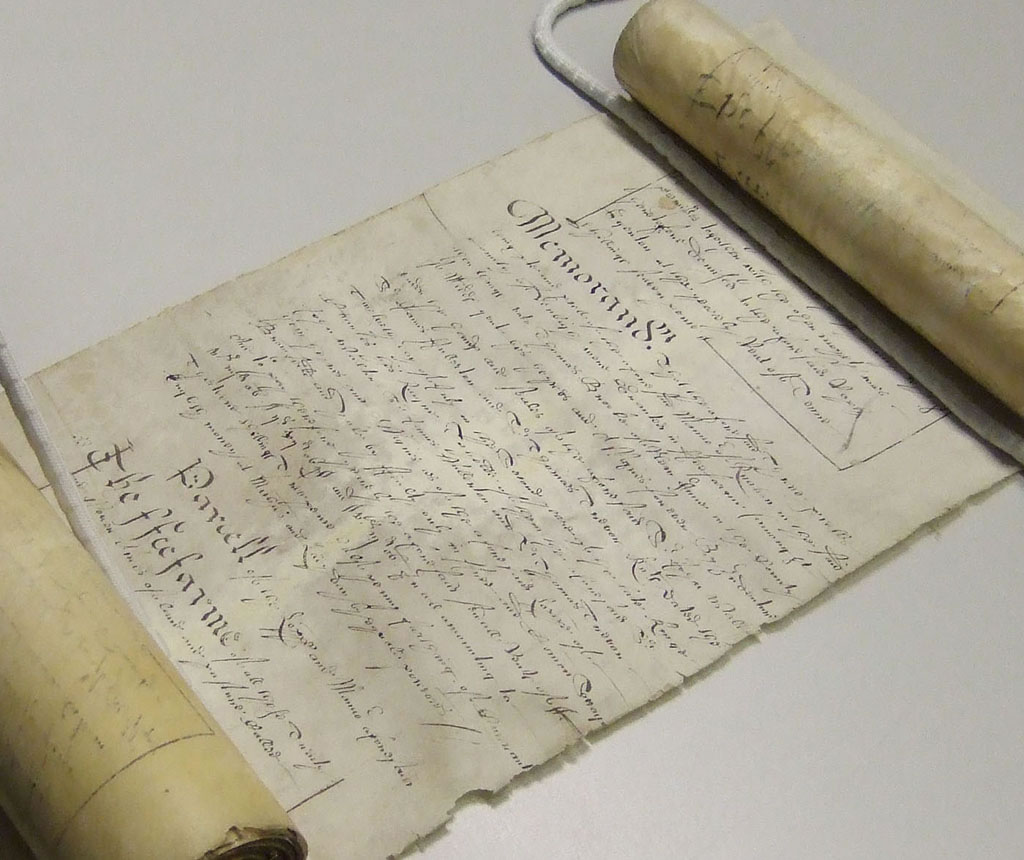
Not all of our records are available to view online but you can search for brief descriptions of them in Discovery, our catalogue.
Search our catalogue using keywords and dates to find descriptions of records you are interested in.
Your search results will let you know if the records can be viewed online or not.
If a record is not viewable online, you have three options:
- visit us in Kew, London to do your own research. Remember to bring the correct ID, as you will need a reader’s ticket to see original documents
- request a paid search
- order copies of documents if you have the full document references
Looking for records that are not online can be a time-consuming process and, as with any search in archival records, there is never a guarantee of success.
A good place to start is with our research guidance A-Z.
You can also search records of other archives using filters in Discovery, our catalogue.
If you visit us in person come prepared so you can make the most of your visit.
Ready to start?
- Search our records using Discovery, our catalogue
- Use our research guides
Want to ask us a question?
- You can contact us, via our online forms, by email, phone or live chat