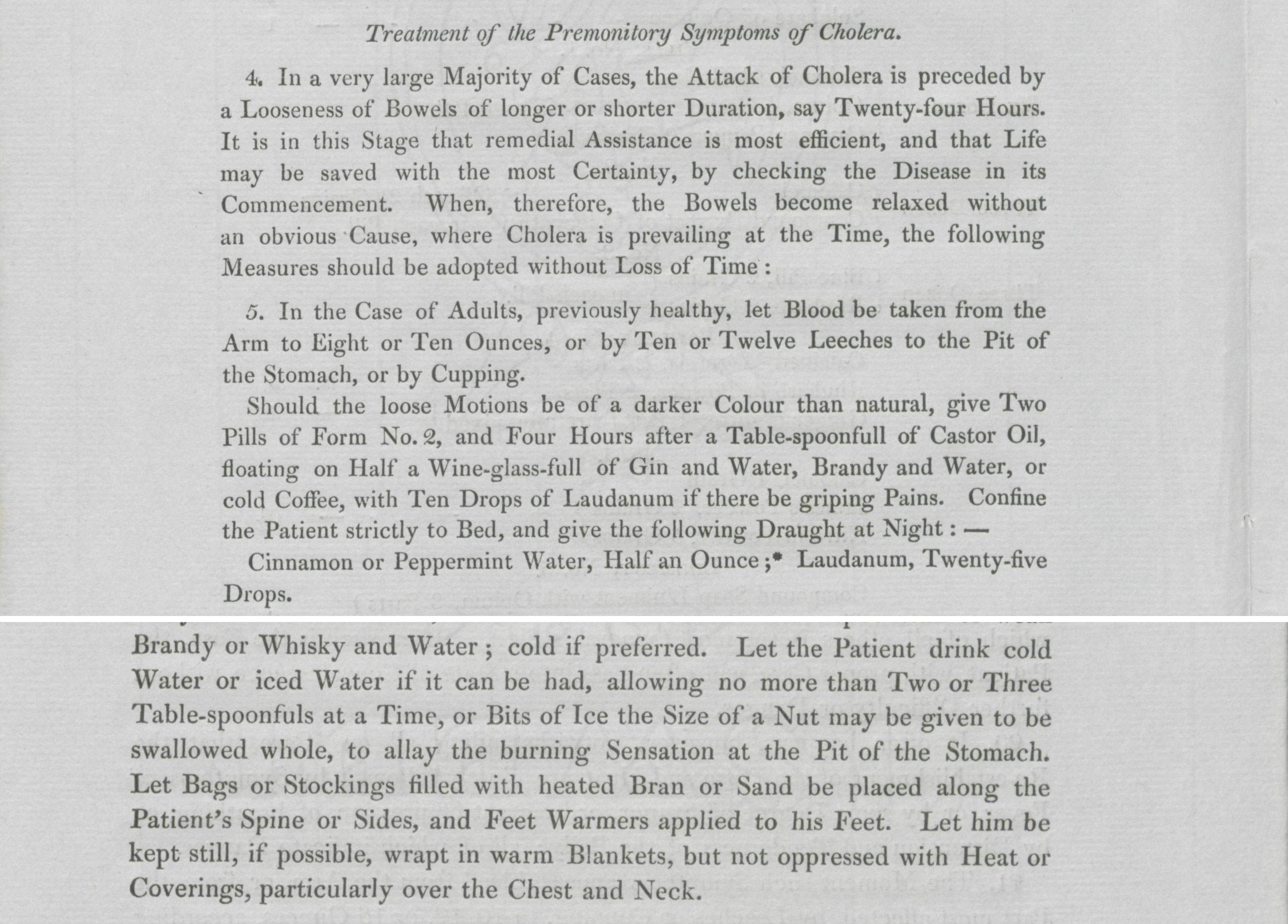
Extracts from a printed copy of ‘Precautionary Hints on Cholera’ issued by the Central Board of Health, 9 May 1832. This describes different stages of the disease and other suggested treatments in addition to medication, Catalogue ref: PC 1/113
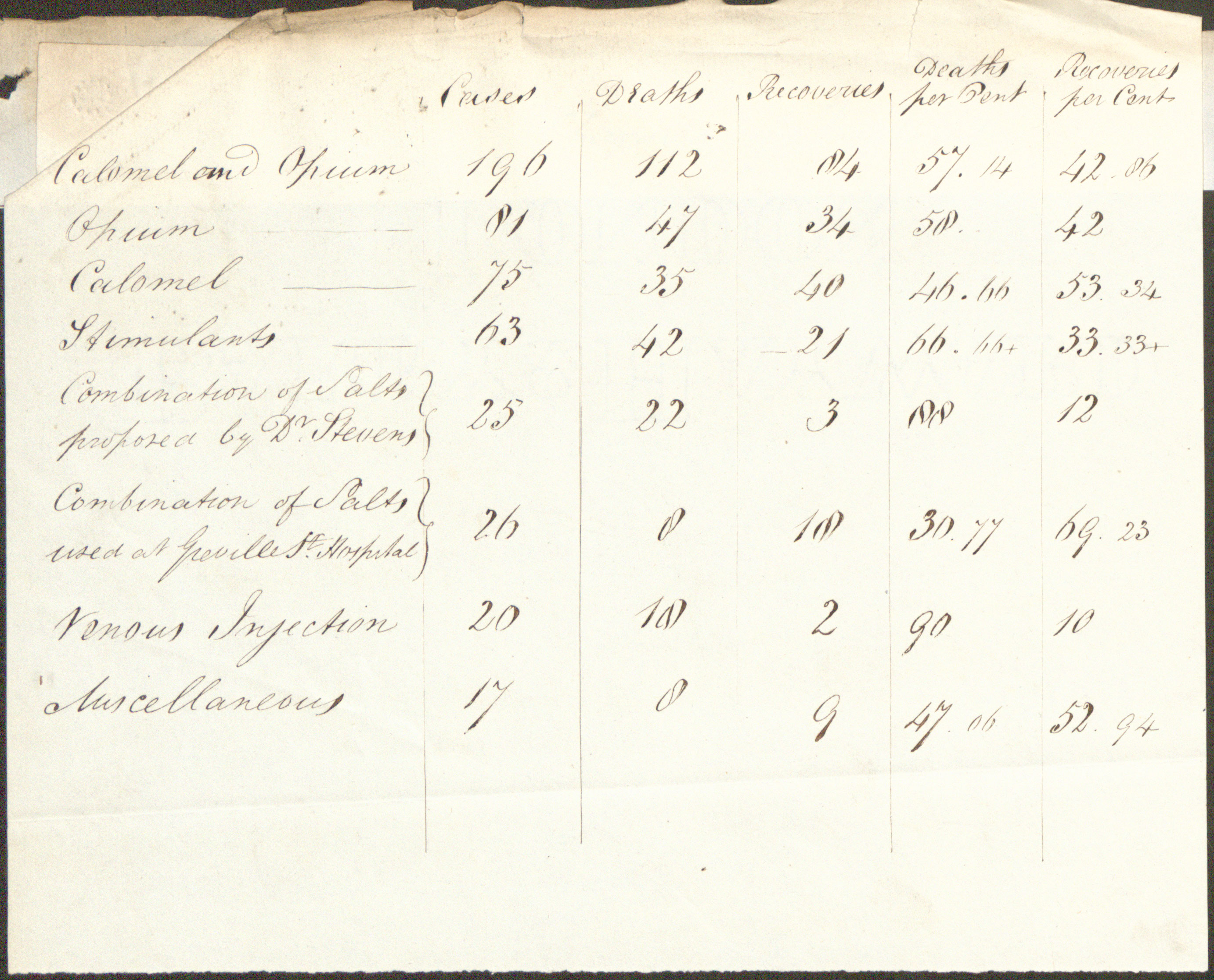
This information table is included in the correspondence and papers of the Central Board of Health, which was re-called to deal with a cholera epidemic in 1831. Catalogue ref: PC 1/114.
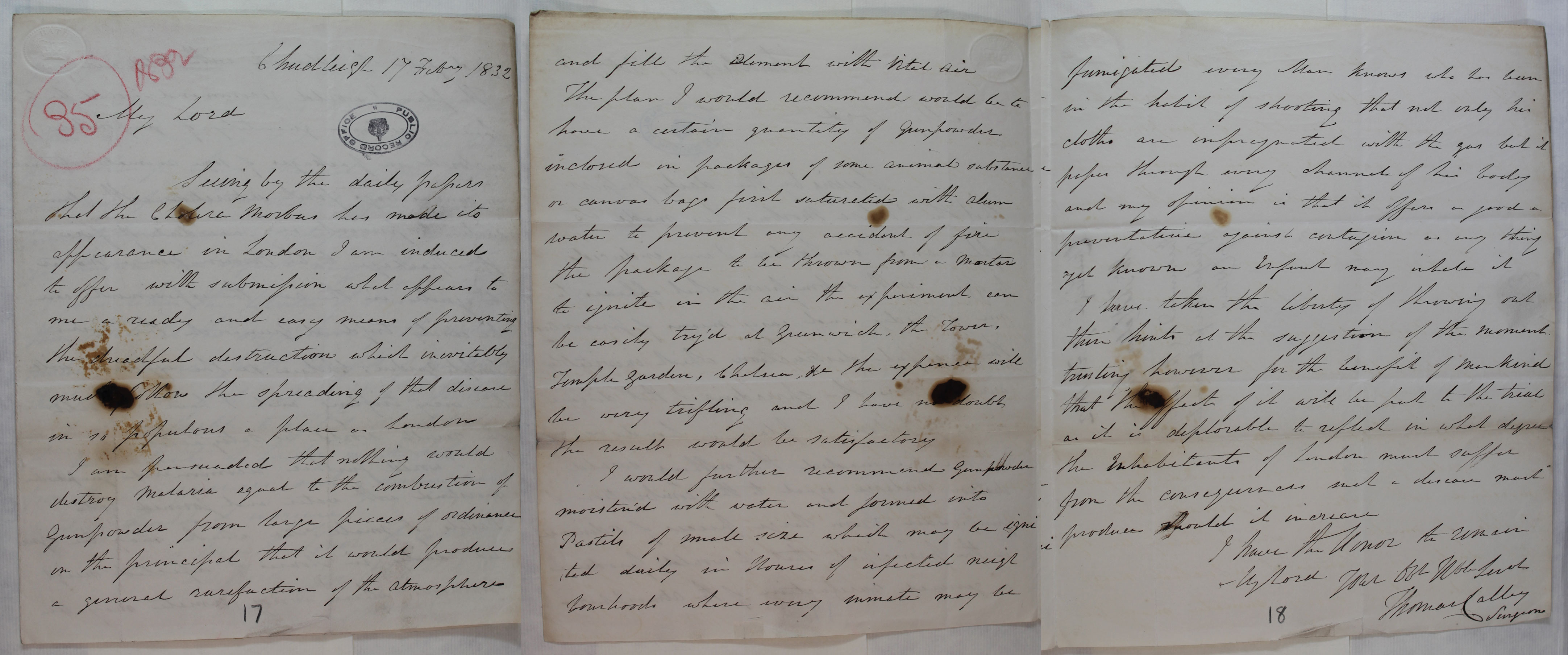
A letter sent to the Central Board of Health, during the first cholera outbreak from a surgeon in Devon, 17 February 1832, Catalogue ref: HO 44/25.
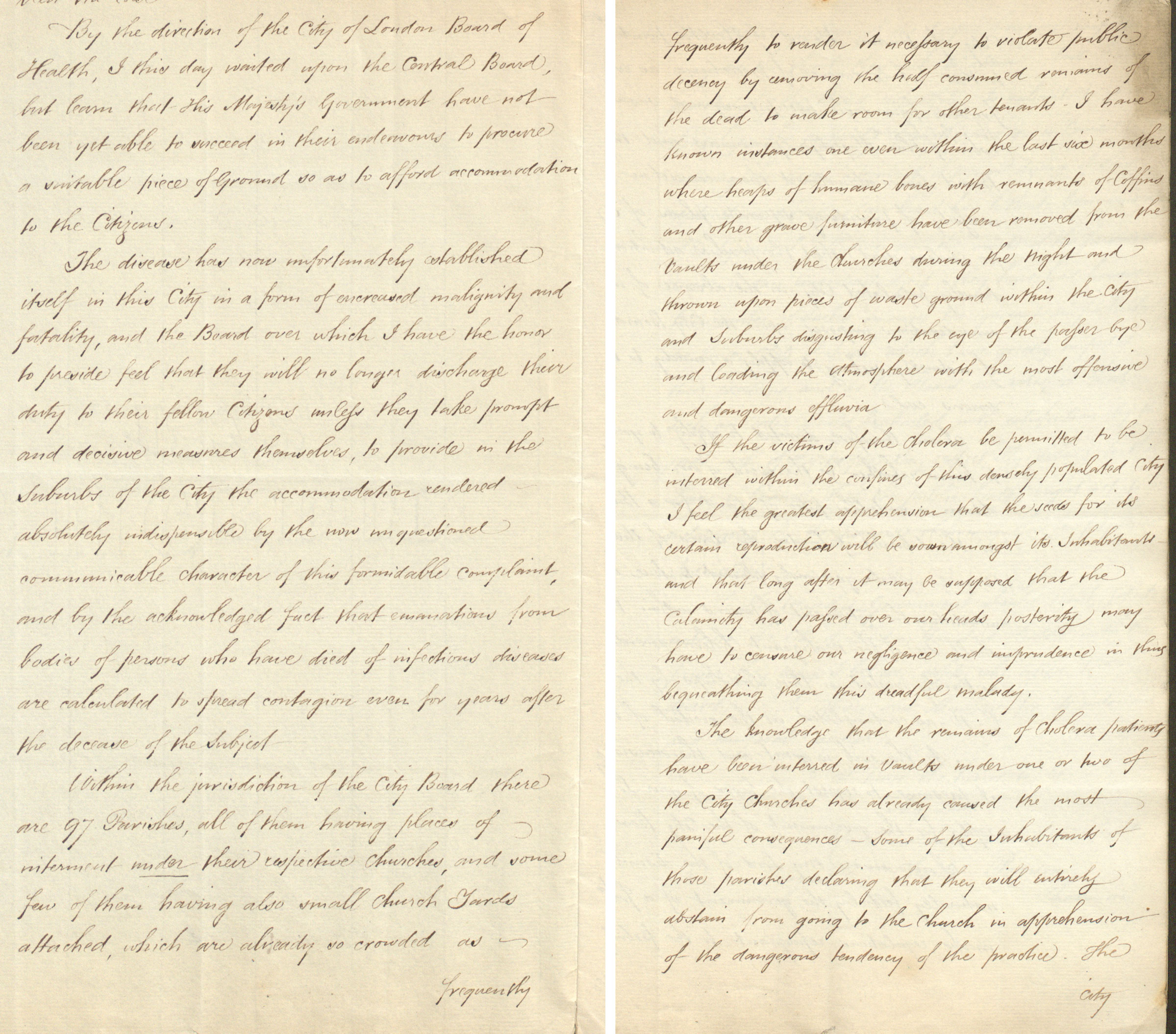
Extract from a letter from Charles Pearson, Chairman of the City of London Board of Health to Marquis of Landsdowne, Lord President of the Privy Council [group of advisors to the sovereign] concerning the need for separate burial grounds for those who had died from cholera, 16 July 1832, Catalogue ref: PC 1/114.
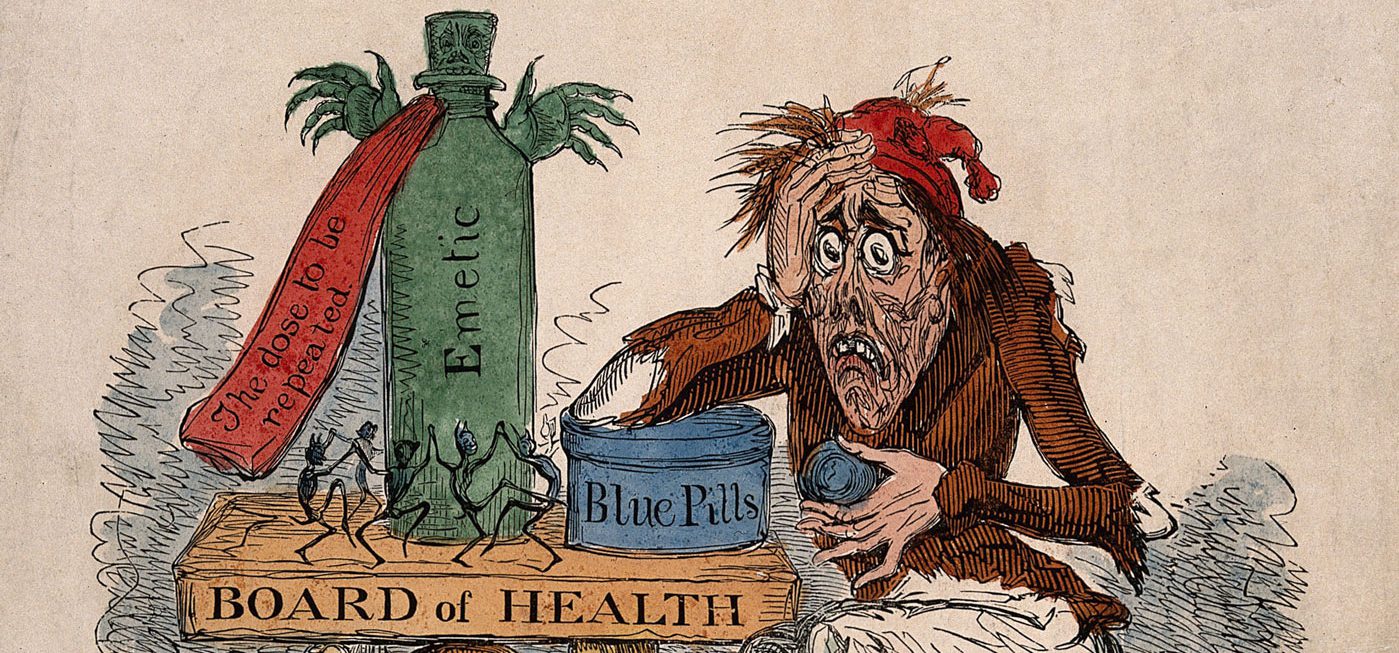
The purpose of this lesson is to explore sources which reveal something about the contemporary medical understanding of the disease, public attitudes and the role of the General Board of Health over a time frame of series of cholera epidemics in Victorian England. For some, the best advice against the disease was to improve ventilation, cleanliness and purge the body, keep it warm or change the diet. For others it required prayer and forgiveness from God. Again, it is interesting to consider why many of these ideas persisted after the breakthrough provided by Dr John Snow in 1854 that linked the presence of contaminated water to the spread of cholera at a time when the authorities and medical profession believed that the disease was spread by miasma, or bad air caused by pollution.
How did the authorities react in 19th century?Cholera in Victorian Britain represented fear of the unknown. It originated from Asia and many doctors were unfamiliar with its cause or treatment. It reached Europe in 1830 and Britain experienced its first epidemic in 1832 when 52,000 died. A second outbreak followed in 1848-9 and caused the death of 53,293 people. This, and pressure from the Health of Towns Association caused the government to introduce the Public Health Act of 1848. The new law set up the General Board of Health in London to give advice on disease prevention and set up local health boards to look into sanitary conditions across the country and appoint medical officers. Yet there was often little or no co-operation between the authorities, and many of the urban poor mistrusted the medical profession. The General Board of Health had no power to force the local boards to act. Nevertheless, the new law marked the beginning of the government taking responsibility for public health despite resistance from many ratepayers. The Public Health Act of 1875 later helped to eliminate this problem as local authorities replaced the local boards which became responsible for the provision of clean water, proper drainage and sewage systems.
Contemporary medical opinion was that cholera was caused by bad air or ‘miasma’ from dung heaps or ‘nuisances’, sewers, damp and dirt. Other doctors argued it was caused from contact with people who had the disease through overcrowding. Their treatments reflected these ideas. For example, isolation hospitals were set up, homes washed with lime and streets cleaned.
The disease seemed to spread most rapidly amongst the poor and they were often instructed to avoid alcohol and eat moderately. People were encouraged to purge the body (empty their bowels) to stop the persistent vomiting and diarrhoea that were the main symptoms of the disease. Patients were often bled with leeches. Overall, these treatments just weakened the bodies of those suffering from cholera and caused them to become even more dehydrated, hastening death in many cases.
Other measures included the wearing of flannel cloth “girdles”, as seen in one of the sources here, or woollen stockings to keep warm. Patients were frequently medicated with camphor and mercury. There were also petitions from across the country requesting, with Queen’s permission, a national ‘Day of Humiliation’ for fasting and prayer in order to ask God to deliver the country from cholera.
Unsurprisingly, there were a host of other “cures” for the disease, for example a surgeon from Chudleigh in Devon suggested gunpowder should be used to blast through the ‘miasma’ that supposedly caused cholera. Another gentleman wrote about the value of drinking brandy in cases of cholera. He suggested that the government should make it readily available for the ‘lower orders’ free of duty ‘until the cholera shall have ceased’.
However, the major breakthrough in understanding the cause of the disease came with the third cholera epidemic of 1854. Dr John Snow, having seen earlier outbreaks of the disease was convinced that it was caused by water contaminated by sewage. He had written a medical paper on this theory in 1849. In 1854 he proved it by mapping cases of the illness to the location of a particular water pump in Broad Street, Soho. The outbreak killed 127 people in three days and 616 within a month. On his suggestion, the Broad Street water pump was shut off and the epidemic receded.
Snow found that houses and public pumps supplied with water used by water companies taking water from where many of London’s sewers emptied downstream into Thames experienced much higher death rates from cholera. Those people whose water had been supplied upstream from Thames Ditton did not become ill. Dr John Snow was a significant pioneer in epidemiology, a branch of medicine which deals with the incidence, distribution, and possible control of diseases.
Britain faced a final cholera epidemic in 1866 in east London. Fewer people died, possibly as there was more acceptance of Dr John Snow’s suggestion of ‘the living organisms’ which contaminated drinking water. For example by Dr John Farr who was a supporter of ‘miasma theory’ and worked at the General Register Office, the government’s department for recording births, deaths and marriages. In subsequent advice, during this epidemic, people were advised to drink boiled water to reduce the risk of infection. However, it was not until 1883 a German doctor, Robert Koch, building on the important earlier work of Louis Pasteur, identified the bacterial causes of cholera (Vibrio cholera) with a microscope and theories about ‘miasma’ were replaced in medical thinking by ‘germ theory’. This provided the crucial evidence that better sanitation and improved water supply were essential to prevent future cholera epidemics.