Contact us
Complete our webform to ask or tell us something about accessibility or accessing our collections and services.
We want everyone to have comfortable access to our collections and services. This page provides accessibility information for anyone planning a visit to us.
If you need help while planning a visit to The National Archives, please let us know. We are always happy to take questions or feedback about accessibility.
Complete our webform to ask or tell us something about accessibility or accessing our collections and services.
We are located in Kew. This is a fairly quiet, suburban area outside of central London.
The paths to our building are smooth and wheelchair-accessible. All public areas in our building and grounds have step-free access.
However, our site is large. If you have mobility difficulties, you may wish to bring someone to assist you.
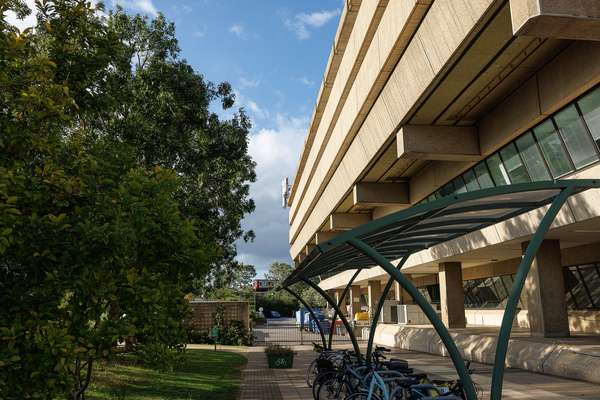
Find out how to reach us by car, bike, coach and public transport, including accessible routes, information on Blue Badge parking, and a map of the area.
You can find out about many of our services and spaces on our Facilities page.

Find out about the facilities we offer our visitors, including where you can eat and drink, do some research, or take a break.
You can learn more about accessibility at The National Archives, including resources that aim to address specific access needs, below.
Accessibility organisation AccessAble have done a survey of our building and grounds. Based on this, they have written detailed access guides about what it is like to visit us.
These guides contain descriptions and measurements of important facilities, and information about lighting and noise levels.
accessable.co.uk
This guide includes our car park, Welcome Hall, Cloakroom, Exhibition Gallery and Pocket Park, as well as our toilets, lift and stairs.
accessable.co.uk
This guide includes our café and coffee bar and their accessible toilet, and our outdoor seating area.
accessable.co.uk
This guide includes our reading rooms, Clore Learning Centre, Auditorium, Library and toilets.
accessable.co.uk
This guide includes our onsite shop.
There are seven wheelchair-accessible toilets across the ground, first and second floors of our building. The transfer space is either on the left or the right depending on which toilet you are accessing.
Photographs and details are available in our access guides:
Parent and baby changing facilities are also available on the ground and first floors.
Assistance dogs are welcome in all public areas of our building and grounds. Please ask our staff if you require a water bowl for your assistance dog.
We have emergency evacuation procedures for all visitors, including those with specific support needs. All public-facing staff are trained to assist with evacuating visitors safely and appropriately.
Our fire alarm is a loud, continuous bell.
We have induction loop systems at these locations:
Please contact us if you need further information.
Our public lift is located next to the staircase beside our café and coffee bar. It can be used to access the ground, first and second floors.
It has accessible features including level access, tactile markings, an audible announcer, and a visual floor indicator.
Photographs and details of our lift are available in our access guide.
There are plenty of spaces to sit between the lift and our Welcome Hall if you need to rest.
Most of our site is quiet and kept at low volumes. However, the area around our café and coffee bar, including our Shop and Exhibition Gallery, can become busy and loud during peak hours and lunch times.
If you would like to take a break in a calmer part of our building, designated quiet spaces are available.
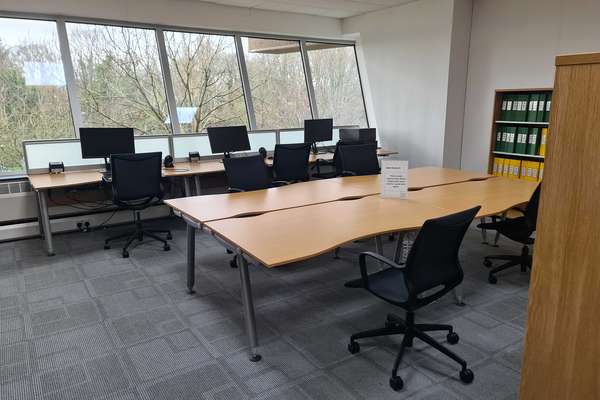
Find out about our quiet research area, contemplation and prayer room, and outdoor spaces.
Please contact us if you are planning to do some research in our reading rooms and you have specific access needs. A number of different access adjustments are possible depending on which documents you would like to view.
For example, if you are unable to attend on the day that you booked to visit us, we will hold your documents for up to three weeks instead of the usual one week, so that you can arrange to visit us again. Please contact us if you would like us to do this.
If you require any assistance while using our reading rooms to view original documents, please ask at the reading room enquiries desk. Resources available include:
You can ask to borrow a magnifying glass. Since numbers are limited, please bring your own if possible.
You can ask to borrow an electronic document magnifier, which uses a camera to show text at a larger size on a screen.
These cannot be used to read original documents but can be used with books, publications and indexes.
You can ask a member of staff to help with carrying items to your desk. Many of our documents are fragile and heavy.
Some of our staff are trained in British Sign Language (BSL), but they may not be available at all times. If you would like a member of staff that uses BSL to be available during your visit, please contact us in advance.
You can collect a free Sunflower lanyard while visiting us. Please ask a member of staff for as many as you need.
The Sunflower lanyard, or Hidden Disability lanyard, is a simple tool that enables you to share the fact you have a disability or condition which may not be immediately obvious. It shows to transport staff, teachers and healthcare professionals, and others, that you may need additional support in some way.