
Norway in 1914
- Overview
- Neutrality
- Allied blockade
- War
- Key documents
Overview
Norway was a small and relatively poor country in 1914 with little direct connection to the causes of the First World War. As such Norway adopted a position of neutrality and managed to maintain this throughout the war.
Norway’s neutrality together with its geographical position between Britain and Germany ensured that it played an important, if largely passive, role in key issues regarding North Sea strategy and the blockade. This placed Norway’s relationship with Britain and Germany under enormous strain as both sides sought to gain any advantage possible.
In the end neither side was willing to force Norway into choosing a side, but British economic pressure ensured Norwegian cooperation on a range of issues, specifically regarding the blockade.
Neutrality
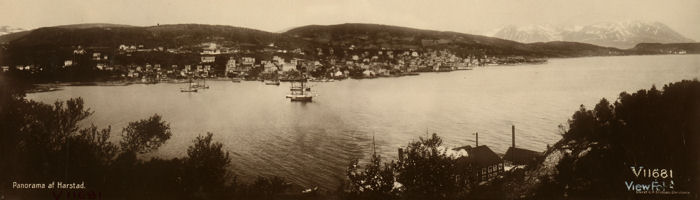
Start of War - Panorama of Harstad ADM 344/504
Like much of the rest of Europe Norway was taken by surprise by the sudden escalation of what, for much of July 1914, appeared to be a Balkan crisis, into a conflict with profound implications for the country. By early August, the Norwegians realised that they would become ‘pawns’ in this great power game and the Norwegian king announced his ‘confident expectation of an ultimatum from Germany demanding within a few hours a declaration as to which side Norway would take’.
Norway was torn between its natural leaning towards Britain and fear of Russia and Sweden. This was made worse by the fact that both Sweden – in the form of Norway’s long weakly defended frontier – and Britain – in the form of its seaborne food imports – had strategic levers against Norway. Unsurprisingly Norway desired to stay absolutely neutral.
The German demand never came, but the Norwegians were forced to balance the ever growing demands of the belligerent powers in order to protect its neutrality. As the years passed this became increasingly difficult (FO 438/2).
Allied blockade
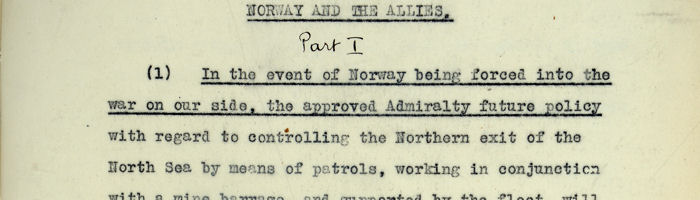
Norway and the Allies ADM 137/2711
From the outbreak of war the Entente powers sought to use their naval dominance to blockade the Central Powers, cutting off imports of vital goods from the rest of the world. Crucial within this was limiting the amount of goods being imported into nearby neutral countries such as Norway and then shipped on to Germany. This immediately inflamed Norwegian opinion, which viewed this as a breach of their neutral rights (FO 382/275).
By 1915, the British became aware of another problem. Norway was a large producer of copper, a key war material in short supply in Germany. As such the British wanted to prevent the Norwegians from exporting their copper to Germany. This was achieved in the short term by buying up supplies and then in the long term by an agreement signed in August 1916. The Norwegians sought to balance these British demands with those of Germany but by December the British felt that the Norwegians were going back on the agreement. This led the British to take action in the form of severe restrictions on exports of coal to Norway (CAB 23/1/3; CAB 23/1/47). The Norwegians were reliant on imported coal for heating, industry and shipping and the embargo led to a domestic crisis.
In the end the Norwegians agreed to the majority of the British demands and the embargo was lifted in February 1917.
War
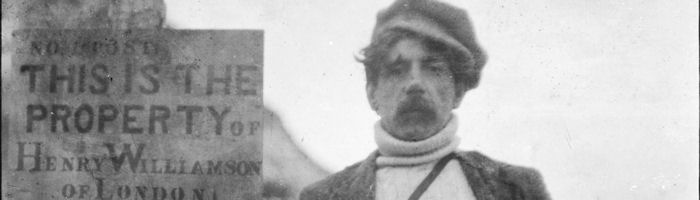
Discovery by Henry Williamson of pyritic deposits at Magdalena Bay, West Spitzbergen FO 371/2055
Norway’s geographical location with its long North Sea coast and harbours on the entrances to the Baltic meant that potentially it could have a crucial strategic impact. At the outbreak of war the British were very concerned about German warships using Norwegian bases, something that escalated as the threat from submarines became apparent. The waters off the Norwegian coast were also used by vessels seeking to run the British blockade in the North Sea leading to intermittent difficulties regarding neutral and belligerent rights.
Late 1916 saw a crisis in relations. Britain was pressing hard to tighten the blockade whilst the sinking of Norwegian ships by German submarines brought Norway to the brink of war with the Central Powers.
Norwegian public opinion was clearly sympathetic to the allies/Entente powers. The British Ambassador reported that ‘at no time since separation from Sweden in 1905 has Norwegian opinion been so strong or unanimous. The dominating notes are intense bitterness and hatred of Germany and similar feelings as regards Sweden’ (FO 382/945).
At one stage Norwegian entry into the war looked likely, but there were concerns in both Britain and Norway about Britain’s ability to protect the country from German aggression. In particular, the Norwegians were worried about the impact of zeppelin raids on their mostly wooden-built towns and the difficulties in supplying the capital, Oslo (FO 371/3021; CAB 24/10/35).
In the end all parties decided that the benefits resulting from forcing Norway to take sides in the conflict were outweighed by the potential risks and the country managed to maintain its neutral status.
Key documents
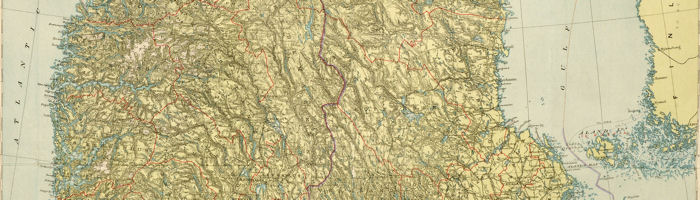
Map showing Sweden and Norway FO 925/39014
- Findlay to Grey. Dated 3 Aug 1914, No. 137B, pg. 53. Document reference FO 438/2
- Norwegian copper exports. Reference 4190/148/1130. Document reference FO 382/275
- Sir Eyre Crowe Memorandum on the blockade. Reference 217608/196978/1130. Document reference FO 382/945
- Norwegian response to unrestricted submarine warfare. Reference 205914/196978/1130. Document reference FO 382/945
- War Cabinet Conclusions, dated 12 December 1916. Document reference CAB 23/1/3