
Denmark in 1914
- Overview
- Pre-war and neutrality
- Blockade
- Peace
- Key documents
Overview
Denmark, a relatively small country, remained neutral throughout the First World War; however it still managed to play a significant role. Denmark’s geographic location meant it was key to accessing the Baltic Sea and therefore it presented challenges and opportunities to both the Allies and the Central Powers. In the end the risks associated with Denmark’s entry into the war prevented either side from forcing the issue.
Denmark also posed a particular problem for the Allies in enforcing the blockade of Germany, and this issue came to dominate Anglo-Danish relations. Despite this complexity, Denmark came out of the First World War in a remarkably strong position. She had retained her neutrality, enjoyed considerable economic windfalls and regained northern Schleswig in the peace treaty, something that had been lost to Prussia over 50 years previous.
Pre-war and neutrality
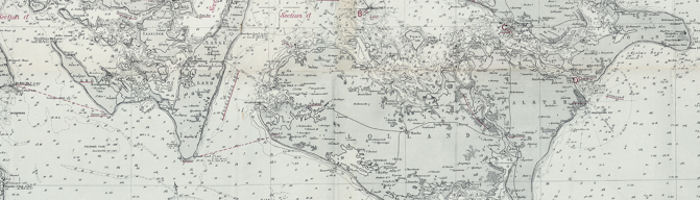
Danish sea defences ADM 137/1266
Denmark had been a key focus of pre-war diplomacy. Both Britain and Germany viewed it as a crucial battleground, control of which would either facilitate, or prevent the entry of British naval forces into the Baltic.
Denmark itself was torn between economic and cultural ties with Britain and pragmatic security concerns which favoured close links with Germany. Throughout the crisis period in July and August 1914 the Danish Government walked a tightrope, trying to avoid being pulled into the conflict by either side. The key issue was the use of Danish territorial waters to enter or exit the Baltic Sea. On the 6 August 1914 the Danish Government announced that they would adopt a position of absolute neutrality and would mine the key channels into the Baltic to prevent their use by either side (FO 438/2).
The strategic importance of Denmark meant that both the British and the Germans regularly infringed upon Danish territorial waters. This became particularly problematic when the Royal Navy began to use them to send submarines into the Baltic and provoked a major crisis when the submarine E. 13 became stranded in Danish waters. Despite being under the protection of the Danes the submarine was attacked by German naval forces, a major breach of international law. Similar issues arose on other occasions, including the stranding of the German submarine U. 20 (FO 372/660).
Denmark’s strategic location combined with British naval superiority meant that the Germans were concerned about the possibility of an Allied attack on Denmark throughout the war. Such an invasion could have enabled the Allies to take control of the Baltic and open up a third front on Germany’s northern border. Despite considerable discussion around the issue, no concrete plans for such a scheme were ever developed, and the British Foreign Office repeatedly reassured the Danes that no such attack would be made. This, however, did little to allay German fears (FO 371/2097and FO 371/3024).
Blockade
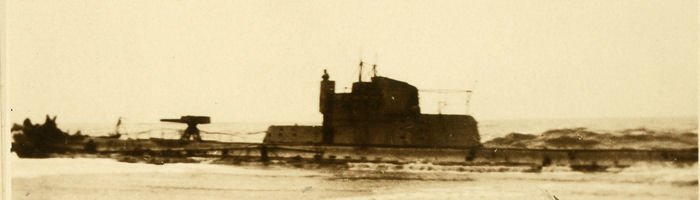
German Submarine U20 ADM 137/1246 folio 621
Throughout the war the blockade was a key Allied weapon against the Central Powers. By obstructing the Central Powers’ imports and exports the blockade severely constrained their ability to wage war.
A major obstacle to the Allies effectively enforcing the blockade was the import of goods into nearby neutral countries like Denmark which were then shipped on to Germany at great profit. Thus the British were very keen to limit Danish imports to the essentials but avoid driving the Danes into the German camp.
Relatively soon after war broke out it became clear that considerable quantities of goods were flowing into Germany through Denmark and a series of agreements were drawn up attempting to limit re-export of goods from Denmark (FO 368/1103). These did not prove as effective as hoped and new agreements with the Merchants’ Guild of Copenhagen and the Danish Chamber of Manufacturers were set up to provide guarantees against re-export (FO 382/285). These were strengthened again on regular occasions throughout the war, but they never completely halted the flow of goods through Denmark into Germany. This careful approach by the British Government had its critics, particularly within the Admiralty, where it was felt that the diplomacy of the Foreign Office was undermining the impact of Britain’s naval supremacy (FO 382/1479).
Peace
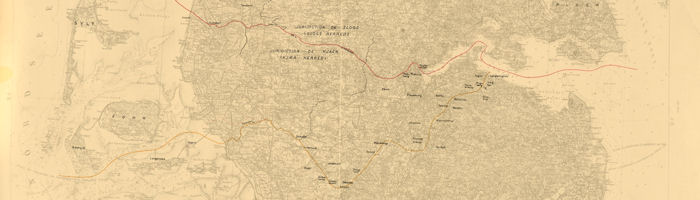
Schleswig, zones to be submitted to plebiscite 1919 MR 1/740/6
Despite remaining neutral throughout the conflict Denmark’s strategic position on Germany’s northern border ensured she would be an important, if largely passive, partner in the peace process.
In the Second Schleswig War of 1864 Prussia and Austria stripped Denmark of the southern Duchies of Schleswig and Holstein, which later become part of Germany. Although Holstein and southern Schleswig had an ethnic German majority who supported this move, northern Schleswig remained predominantly Danish and German rule was very unpopular.
As part of the reshaping of Europe in the Paris Peace Conference it was suggested that ‘the opportunity should be taken to bring to a final settlement the frontier between Denmark and Germany’ (FO 608/141/4). This was done by plebiscites held in two zones, the northern one being strongly Danish and the southern one more mixed. Perhaps surprisingly, the Danish Government appealed to the Allied Powers not to use the issue to punish Germany or settle any strategic issues by transferring areas with a German majority to Denmark. The reason for the Danes’ reticence was a fear that a rejuvenated Germany would, in future, use a large German minority in southern Denmark as an excuse to meddle in Danish affairs (FO 608/137/7).
The two plebiscites took place in May 1920. As expected the northern zone voted overwhelmingly to join Denmark, whilst the southern zone voted equally strongly to remain part of Germany. Once the boundary was finally decided it was ratified by the Schleswig Treaty, signed 5 July 1920 (FO 371/4736 and FO 93/29/45).
Key documents
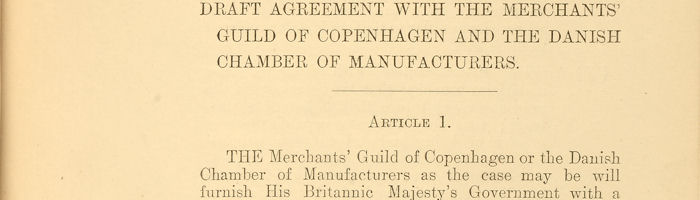
Draft agreement for import of goods into Denmark FO 382/285 (paper 169676)
- Danish declaration of absolute neutrality and mining of territorial waters. Document reference FO 438/2
- Agreement with the Merchants’ Guild of Copenhagen and the Danish Chamber of Manufacturers. Document reference FO 382/285
- Allied proposals for the cession of territory. Document reference FO 608/141/4
- Schleswig (Slesvig) Treaty. Document reference FO 93/29/45