On behalf of The National Archives, I want to recognise and celebrate the work of our volunteers. Whether they have been with us for a few months or over 20 years, volunteers help make our records more accessible. They do this by cataloguing our records, conserving them or supporting our visitors' experiences.
We regularly share blog posts to highlight our volunteers' works. These posts share milestones from projects our volunteers work on that make our records searchable on Discovery, our online catalogue.
From our volunteers
Read about the latest work from our volunteers and the incredible stories they have found in the archive.
Here are just a few highlights from both new and ongoing volunteering projects across The National Archives.
BT 50 and BT 51: Registered designs
Over the last two years our volunteers have transcribed over 150,000 searchable entries for registered designs from 1885–1888. These records show who applied for exclusive legal rights over the appearance (look and shape) of a product. Jessie O’Keefe, one of our volunteers, wrote about the project and importance of these records.
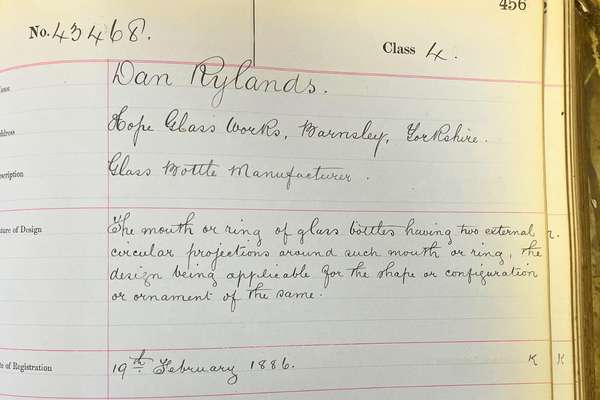
In her blog post, Jessie focuses on Dan Rylands of the Hope Glass Works, Barnsley, who registered an early version of the screw-top bottle design we know today.

Design number 43358: The mouth of a glass bottle with three rings around the neck. Catalogue reference: BT 50/59/43358.
Collection blog
Cataloguing the BT 51 and BT 50 registered designs
Explore how a team of volunteers have transcribed The National Archives’ records of registered designs from 1885–1888.
The WO 25 record series: Officers’ service records
Continuing one of our long-running projects, our volunteers are improving the catalogue descriptions for our 19th-century officers’ records (military service records) found in the WO 25 series.
Thanks to this work, Discovery users can find the following information within updated catalogue descriptions about officers from this period:
- Name
- Rank
- Date and place of birth
- First and last rank
- Dates of service
- Genealogical (family) details

A section of Lord H Kitchener's service record, which was found during this project. Catalogue reference: WO 25/3914/304
Collection blog
Cataloguing British Army officer service records

Find out how our volunteers have improved catalogue descriptions for 19th-century military service records.
The A–Z of the Royal Navy Captains
Our volunteers have spent a few years cataloguing 564 boxes of captains’ letters for the years 1793–1815 from naval ships. This latest phase of the volunteer work catalogued 35,000 letters across 225 boxes. Thanks to this work, around 100,000 entries have been added to Discovery across the Admiralty records.
This volunteering project has also uncovered some incredible records. For example, one record discussed the transport of the Rosetta Stone on HMS Egyptienne. The ship’s captain, Captain Ogle, wrote from Woolwich, London on 27 February 1802. His letter explains that the Officers of Customs prevented him from unloading the ‘objects of curiosity’ (the Rosetta Stone) without a Customs House order.
With these catalogue entries now complete, our volunteers have begun to work on records from around the time the United States of America gained independence. This will make more records accessible as our upcoming exhibition, Revolution 250: America's Independence Story 1763–1783, begins later this month.

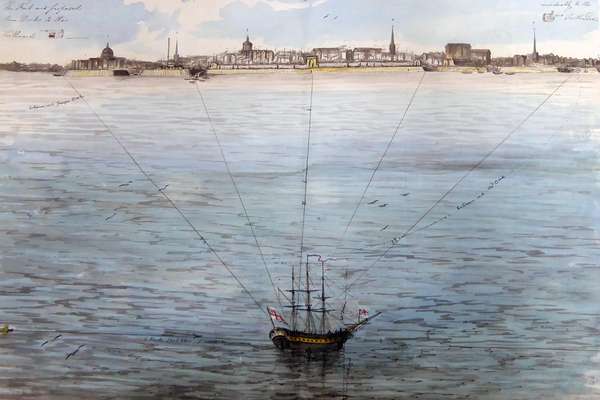
A hand-drawn map by Captain John Wight, 1801. Catalogue reference: ADM 1/2227/141
Collection blog
The A–Z of the Royal Navy Captains' letters project – 'N' to 'Z'
Read Bruno Pappalardo's blog post to find out more.
Cataloguing the copyright collection
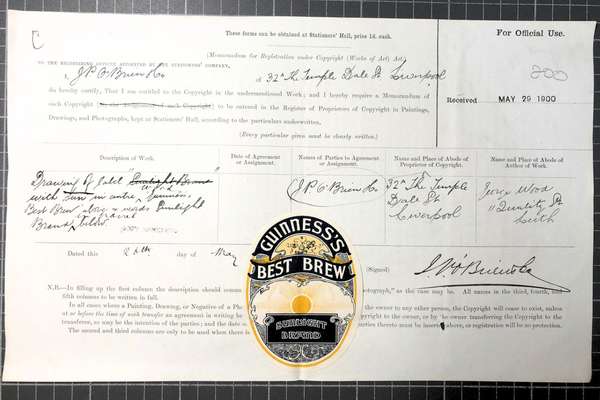
The National Archives holds a large collection of entry forms for artworks registered under the Fine Arts Copyright Act of 1862. Our volunteers have catalogued thousands of these records so far. The entry forms include illustrations of paintings and drawings registered for copyright protection. Thanks to our volunteers, over 35,000 of these records are now searchable on Discovery.
Due to this, researchers can find registrations by name of the owner of the work, such as Alfred Stedall. He was a wholesale clothing manufacturer who worked with various artists to produce drawings of his products for catalogues and advertisements.
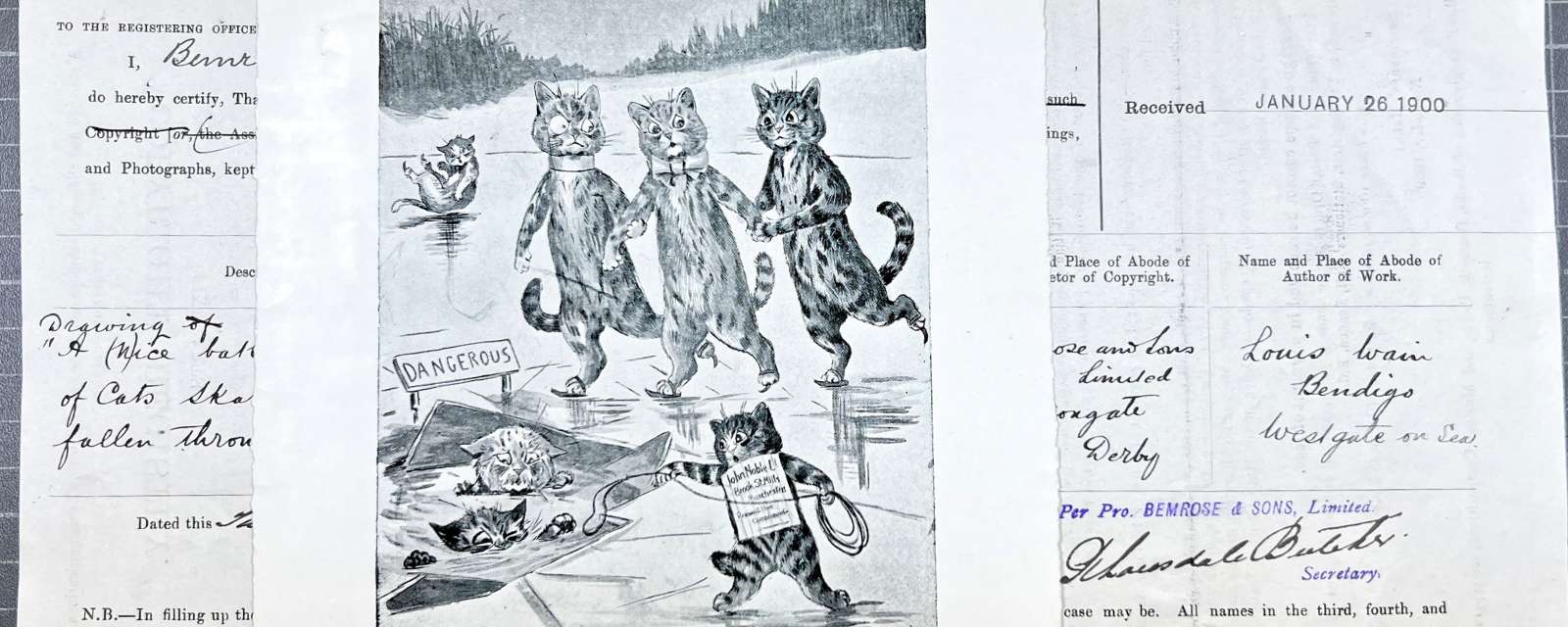
Our volunteers also catalogued entry forms from well-known names such as Helen Beatrix Potter, who registered two designs in 1896. Louis Wain, an illustrator famous for drawing human-like cats, also registered four designs between 1892 and 1900.

Copyright owner of work: Bemrose and Sons Limited, Irongate Derby.
Copyright author of work: Louis Wain, Bendigo Westgate on Sea.
26 January 1900.
A copyright entry form for a drawing titled 'A (n)ice bath' by Louis Wain (1900). Catalogue reference: COPY 1/160/123-124
Collection blog
Cataloguing the copyright collection
In this blog post, Katherine Howells explores how our volunteers have catalogued copyright records and highlights the stories they can tell us.
Thank you to our volunteers
Without our volunteers, we could not make our records easy to find to a wider audience. Their work to create accurate and detailed record descriptions allows us to highlight the records in our collection and the lives of people found within them. This also helps the conservation of our documents, as it limits the number of records researchers need to search through to find what they are looking for.
This Volunteers’ Week and beyond, The National Archives wants to extend a sincere and well-deserved thank you to all our volunteers.
Volunteering with us

Volunteers are essential to the work of the National Archives. Discover what our volunteers do, how they support us and how you can get involved.
